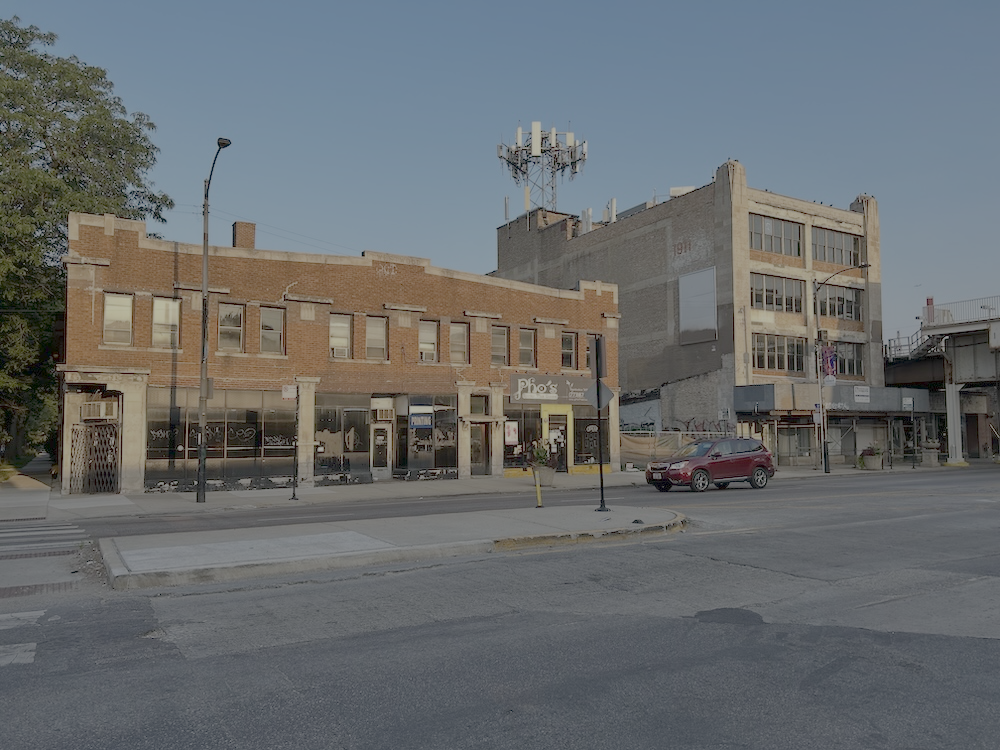
Unless you live in a box, you are likely encountering interesting people and having interesting interactions every day. Maybe you don’t see it that way, but I see a world full of colorful, fascinating, entertaining people. Let me tell you about three, just on my block.
Jeffrey – that’s not his name – usually hangs out at the entrance of the alley, with an energy drink and clove cigarettes. He’s there all year round, any time of day or night, usually crouching, or just sitting on the pavement, by the backdoor of his low-rise apartment building. His hair is long, a mess, and his jeans are too big for his wiry frame, so he has to hold them as he walks down the street in his moccasins. He looks to be in his late 20’s and clearly has “seen some things”.
He’s outside a lot, and when I work from home I walk my dog three or four times a day, so we pass each other. On one pass, he asked about my dog, with a high, squeaky voice, so I introduced myself and he told me his name, not-Jeffrey, and that he was an aerospace engineer who just moved in the neighborhood. He likes it because it’s quiet, and he can do his work from home without disturbance.
Mostly though, Jeffrey sits outside his backdoor, or walks up and down the block, waving hello, petting my dog, between his apartment and the neighborhood 7-Eleven where he buys cigarettes.
But some things don’t make sense. Like the time I saw Jeffrey ask someone for spare change in front of the 7-Eleven. And why is he always in the alley? It seems like maybe Jeffrey isn’t totally fine, but he seems safe – I think…
Frank – I’m not sure if that really was his name – was an old Italian guy that wandered up and down my alley about ten years ago. I’m pretty sure he’s dead now, but for a while, he was ever present – and I saw a lot of him because I don’t have a garage, just an open pad between my backyard and the alley.
Whatever the weather, Frank wore a light blue cardigan sweater. I think once – on a blistering hot summer day – he wore a short sleeve, white, button down shirt, open, with a “wifebeater” undershirt. As usual, he was unshaven, looking every bit the old-tyme stereotype. Frank had a wooden cane, and a thick, thick Italian accent, with very broken English.
I’d be in the backyard, and he’d amble by and yell a question at me: “This hotta nuf for ya?” Or, if I was grilling, “What’cha makin?” Then we talk about nothing in particular, and he’d eventually half-gripe, “OK! I gotta go,” and then amble back towards his open garage door.
His garage, a few doors down from me on the other side of the alley, was jammed with scrap wood of every kind. So much that there was no room for a car. “If you ever needa wood – just stoppa by! I gotta plenty!” He’d yell over his shoulder after a chat.
He was the crazy, old guy on the block. Then, I asked him, “Frank, how long have you lived here?”
He paused, then, “Me? Over fifty years. You see my house? And then the three next to them? Those are all mine.”
I was stunned. “Wait. You own all those?”
“Suuure,” Frank drew it out, nodding his head as he said it.
“How?”
“I worked for the county! I knew a guy in probate,” as if that answered everything. But then, back in the 1960’s and 70’s, for a Cook County worker, maybe it did? Suddenly, I realized that with growing home values, Frank was the neighborhood millionaire. He wasn’t just a kook. He was a savvy kook.
Once, I was working in the yard, and Frank and I were talking about something or other, and then Teresa, my wife, poked her head out the back window and yelled a question at me, as we do. I answered, and she went back inside.
Frank, looked at me then, held up a hand doing a talking puppet motion: “Women, all they do! Yappa, yappa, yappa!” He turned on a heel and ambled back to his garage.
Tiffany – not her real name – owned the dry cleaner around the corner from me on Western Avenue. Across from the busy Brown Line L station, she had plenty of business, back twenty years ago when people still wore dress clothes to work every day. Tiffany was Laotian. She ran the store, with a giant picture window looking across the street to the bus turnaround by the L station. She had a husband, who occasionally came by, but said little to customers. Tiffany’s young daughter would come to the store after school and quietly do homework in an alcove by the front window, school books spread across the carpeted ledge by the glass.
I’d stop by a couple times a week to drop off and pick up clothes before and after work, listening to the bell that would tinkle with each door opening. Tiffany and I would chit chat about the neighborhood, the things she’d see on the busy street and gossip about the other stores down the block. The Thai restaurant, the Korean liquor store, the Mexican used car lot, the German guy’s junk shop. It was a motley group.
Once, a tired bus driver stepped out of his vehicle across the street, rushing to the cold, unheated bathroom reserved for drivers in the L station. He’d forgotten to put on the parking brake, and his bus, facing Western, began to slowly roll. With nobody in the bus, it went into the street, cars screeching to a stop, while the bus picked up speed – and then crashed right through Tiffany’s picture window, smashing a huge hole.
I stepped off the train that evening and saw the accident scene. A few hours late, I looked around for Tiffany, but everything was already boarded up.
The next two mornings, I went by the store. No sign, no activity. I began to worry.
Mr. Lee, the liquor store owner, didn’t know what happened to Tiffany either.
Finally, three days later, I stopped by after work and Tiffany was there – with bruises on her face. As soon as I walked in, she burst into tears. The whole story spilled out. She was in the back, behind the racks of dry cleaning, when the bus came crashing through the window. Her daughter had stayed at school late, so she was safe, away from the window. When the bus crashed, it was total chaos, and a complete mess. The one-story, brick building was strong enough that it held the bus back from the counter. It was as if a CTA bus had come to pick up its cleaning. Her insurance had kicked in right away and paid for boarding up the windows that day. She reached over the counter and held both my hands, and sobbed and sobbed.
But the bruises? Was she OK?
“Fine. Fine. I’m fine. I’ll be alright,” she quickly said. There was no real explanation for the bruises on her face. They didn’t seem to fit with the rest of the story.
The store window was fixed, and time went by. Her daughter grew up, and sometimes manned the counter for her mom. Occasionally, her husband would breeze in, then leave. Angry about…something?
Over the years, people wore dress clothes less and less. Tiffany had less and less business. Our conversations constantly turned to how few people were coming in. She picked up tailoring work, which she said brought in more revenue. But, “Not enough, Mike. I worry I’m going to have to close the store.”
And then, more bruises. And one day, a really black eye. “Are you OK, Tiffany?” “I don’t want to talk about it, Mike. Don’t worry about me.”
And then, spotty opening hours. Sometimes the store was open, sometimes not. Tiffany wasn’t always around. Once her daughter was working the counter, not sure where her mom was. Once it was a woman I’d never seen before.
Then, a sign on the door: “We’re closing in a week. Come pick up your clothes!” I went in, Tiffany was at the counter. Fading bruises on her face. She looked at me, and burst into tears again.
“Mike! Oh, Mike! I’m so sorry. I have to close! We aren’t making enough money, and I have to sell everything.”
It was very upsetting. “Tiffany, don’t worry about me. I’m worried about you. Are you OK? I haven’t seen you in weeks.”
“It’s my husband. I couldn’t tell you because my daughter was always around, but he was beating me. It was terrible. The store did badly, and he’d beat me. But I couldn’t take it any more, so I divorced him. Last week! But now I have to sell the store anyway. I don’t know what we’ll do!” And she sobbed more, mashing her hands to her face. And, suddenly, “But I’ll be OK! Don’t worry!”
Things went on like this for a while. She was really, and truly closing, someone else was buying out her lease and her equipment, but she had to get as much clothes returned as possible to keep that cash. She wouldn’t tell me where she was going. It was going to be “far away from here.”
Realizing this would be the last time I’d see her, I came around the counter – for the first time ever – and hugged Tiffany as hard as I could. She shook, wept and I shed a few tears myself. And then the door bell tinkled, the last time I’d hear it. We parted and I told her that I’d miss her always. “You were my favorite customer, Mike,” she said. And then I went out the door.
A week late, all the equipment and clothes were gone and a tailor had taken over the store. A short, trim man in a well made outfit – probably his – ran the shop. But Tiffany was gone. No forwarding number. Just gone.
My neighborhood, my life, felt less. Less than it had before. Tiffany, wherever you are, I hope you know what an important pillar you were for my world. I loved stepping off the train to see you. You made my world so much richer.
Other thoughts this month
Does AI think you’re important? Find out!
Desktop Tower Defence. Oldie but goodie that never fails to suck me in for 20 minutes.
Empires don’t get killed, they commit suicide. Should the US be on suicide watch?
Bouille is a left-wing polemicist, but he has a broader point here: We need our journalists to ask politicians to explain their motivations, not just their actions.
Do you like trains? You can track Big Boy.
My teen son was blown away by the reality of the 1970’s JC Penny catalog.
I’ve made this focaccia recipe four times in the last two weeks. Heaven.
Honda decided the EV market was so depressed in the US, it closed two huge new factories in Ohio – before they opened – and took a $16 billion write down. Meanwhile, one in four new cars sold worldwide was electric in 2025. Two questions: 1) What do you suppose the problem is in the US? 2) If you were a large manufacturer of any kind, would you want to take a risk in the US right now?